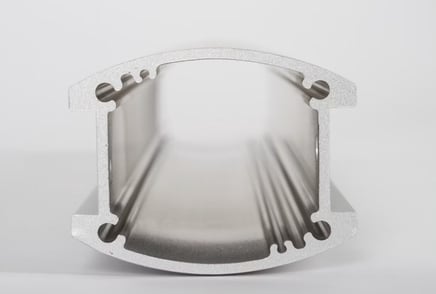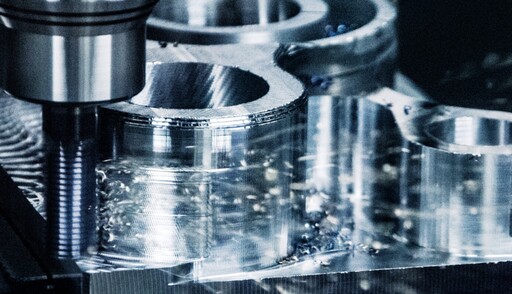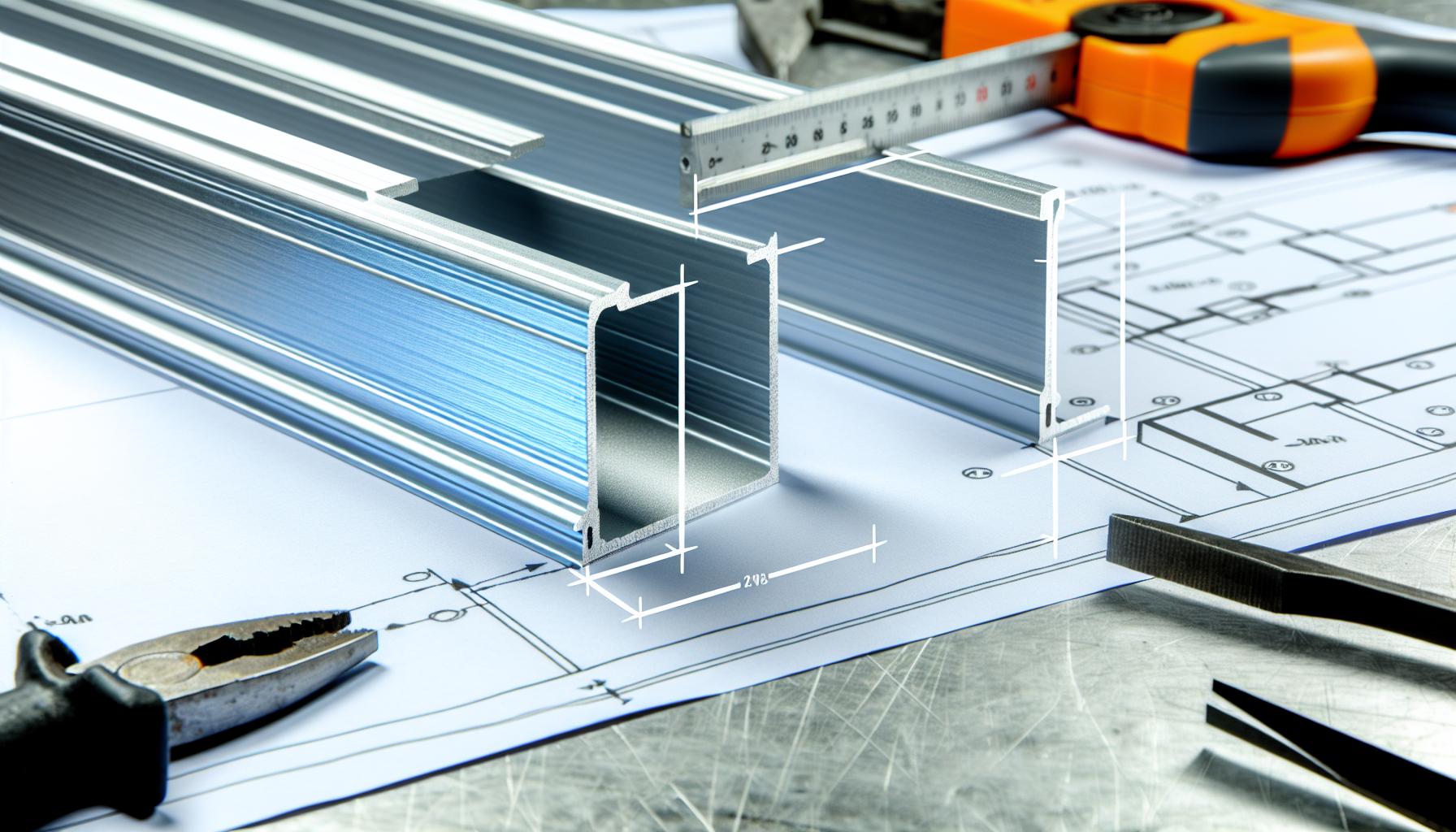
Profall designs and manufactures aluminum profiles to customer drawings and completes them with precision machining operations, including micro drilling. In this article, you'll learn how it works, which technologies are available, and how to request it for your project.
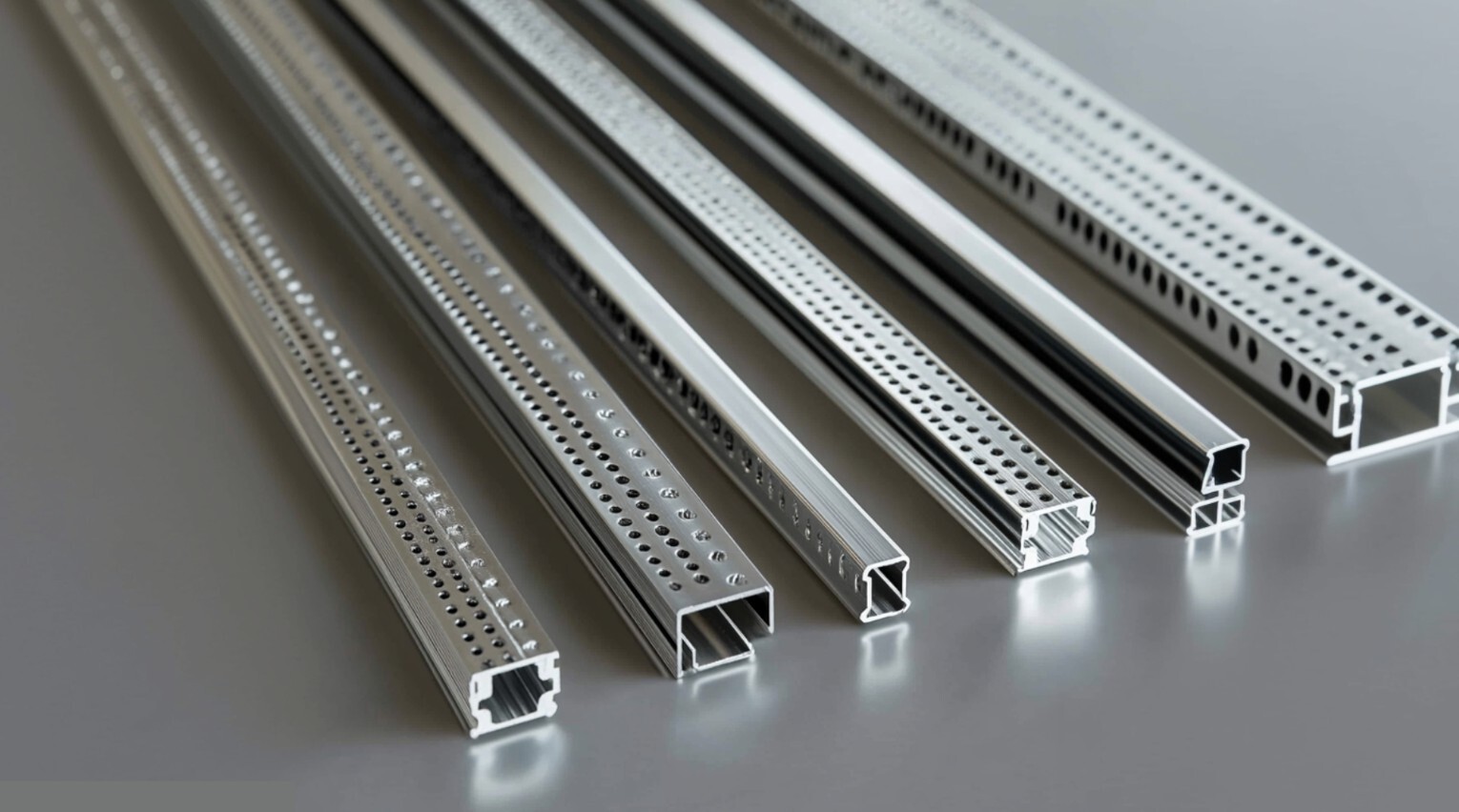
In this article, we cover:
- What micro drilling is and how it differs from conventional drilling
- Mechanical vs. laser micro drilling on aluminum
- Technical parameters of micro drilling on aluminum profiles
- Industrial applications of micro drilling on aluminum profiles
- Micro drilling on special profiles and complex cross sections: the Profall approach
- How to request micro drilling on aluminum profiles from Profall
What micro drilling is and how it differs from conventional drilling
Micro drilling is the machining process used to create small-diameter holes, conventionally under one millimeter, with tight control over position, shape, and size. It is used when a component needs passages for air or fluids, or mounting points for very small parts.
There are three main technologies: mechanical micro drilling, which uses carbide micro drills mounted on high-speed spindles; laser micro drilling, which vaporizes the material without contact; and EDM (electrical discharge machining), used mainly on harder materials.
Compared with conventional drilling, it is not just the scale that changes: the whole process does. Micro drills are fragile and cannot withstand vibration or excessive loads. They require high spindle speeds, carefully calibrated feed rates, and cycles that clear the chips at every pass. Positioning also becomes critical: on a hole just a few tenths of a millimeter across, even a minimal deviation matters far more than on a standard hole.
Mechanical vs. laser micro drilling on aluminum
Mechanical and laser micro drilling achieve the same result, a hole a few tenths of a millimeter across or smaller, but with different characteristics. Understanding them helps you choose the right technology for your component.
Mechanical micro drilling
- Precision: produces cylindrical holes with smooth walls and a constant diameter along the entire depth.
- Minimum diameter: commercially available micro drills go down to about one tenth of a millimeter.
- Depth: with peck drilling cycles, depths of several times the diameter can be achieved, depending on the tool and the alloy.
- Effect on the material: material is removed cold, without altering the metallurgical structure of the alloy. The only issue to manage is the burr at the hole exit.
Laser micro drilling
- Precision: it can produce a very large number of holes in a short time, but the holes tend to be slightly tapered.
- Minimum diameter: it can go down to a few tens of microns.
- Depth: decreases as wall thickness increases. Laser drilling performs best on thin walls.
- Effect on the material: it creates a heat-affected zone around the hole and a recast layer on the hole walls. Aluminum is highly reflective and an excellent heat conductor, so it requires dedicated laser sources.
Which one is used on extruded profiles? For aluminum profiles, the most common solution is CNC mechanical micro drilling. The walls of an extrusion are typically one millimeter thick or more, the holes must meet defined dimensional tolerances, and they often have to be positioned relative to other operations performed on the same part, such as milling and drilling. Laser drilling is mainly used on sheet metal and thin walls, where thousands of holes are needed and taper is not a concern.
Technical parameters of micro drilling on aluminum profiles
A micro drilling project is defined by a few key parameters. These are the same parameters our technical department checks during the feasibility analysis.
- Hole diameter: from a few tenths of a millimeter down to the limits of available micro drills. The smaller the diameter, the more tightly the process must be controlled.
- Depth: depends on the wall thickness and the depth-to-diameter ratio. A through hole in a thin wall is simpler than a deep blind hole.
- Tolerances: vary according to diameter, depth, alloy, and profile geometry. They are defined case by case on the technical drawing.
- Alloy: Profall manufactures its extrusions using so-called soft alloys from the 1000, 3000, and 6000 series. 6000 series alloys, in particular 6060, 6063, and 6005, offer good machinability and are the best choice for machined components. 1000 series alloys, with a minimum purity of 99.5%, are softer and require dedicated parameters to prevent chips from sticking to the tool.
To assess whether a project is feasible, it pays to consider a few criteria from the very start:
- the depth-to-diameter ratio of the hole;
- the wall thickness and any chambers or cavities behind the drilling point;
- the distance from edges and between holes;
- the entry surface, flat or curved, and how accessible it is;
- the number of holes and their layout on the profile;
- subsequent finishes: anodizing and painting add a surface layer that, on holes this small, must be taken into account at the design stage.
Industrial applications of micro drilling on aluminum profiles
Aluminum micro drilling becomes essential when a component must stay lightweight while precisely managing the flow of air, fluids, or cables.
- Aerospace. Micro holes create passages for air and fluids in components where every gram and every dimensional deviation counts.
- Electronics. In heat sinks and board enclosures, micro holes improve airflow and provide mounting points for miniaturized components. Extruded aluminum already plays a leading role here, as shown by the aluminum profiles for electronics manufactured by Profall.
- Lighting. On lighting profiles, micro drilling is used mainly to ventilate LED modules and route cables. Explore our aluminum profiles for lighting.
- Medical. Medical equipment requires repeatable components with calibrated holes for air, fluids, or sensors.
- Precision automotive. Sensors, fluid passages, and lightweight components all require small, precisely positioned holes. Learn more about our aluminum profiles for automotive and electromechanical applications.
In each of these sectors, micro drilling turns an extruded profile into a component ready to be integrated into the final product.
Need a custom micro-drilled aluminum profile? With the Profall configurator, you can start defining your project in a simple, guided way by specifying shape, dimensions, quantity, and required features. Our technical team will assess feasibility and help you choose the best solution.
Micro drilling on special profiles and complex cross sections: the Profall approach
90% of Profall's production is dedicated to special profiles: non-standard cross sections, often with thin walls and internal chambers. With our 850-ton extrusion press and line, we produce small and medium-sized extrusions, including highly complex ones. It is precisely on these geometries that micro drilling becomes a challenge.
There are three main challenges:
- Clamping: the profile must be held firmly without deforming thin walls or open sections. Incorrect clamping shifts the position of the hole.
- Positioning: each hole must be referenced to the actual geometry of the extrusion, which has its own extrusion tolerances. Clear datums, agreed on the drawing from the outset, are essential.
- Accessibility: drilling on curved surfaces, near ribs, or on walls with a chamber behind them requires specific tool orientations and dedicated machining cycles.
Our advantage is that we manage design, extrusion, and machining as a single workflow. Our technical department analyzes the project from the earliest stages and identifies critical issues before the profile goes into production. When needed, the cross section itself can be designed to make micro drilling easier, for example by adding reference surfaces or flat areas where the holes will be. Tolerances are defined and shared on the drawing, case by case, based on the application.
This level of detail is made possible by RC Ramera, the company that has joined the Profall group and specializes in high-precision machining of aluminum. RC Ramera performs micro drilling to tight tolerances, backed by over 40 years of experience and a machine fleet that includes 5-axis CNC machining centers capable of working on every face of the profile, on bars up to 8 meters (about 26 feet) long. For you, this means a single point of contact from extrusion to finished part, anodizing and painting included.
Want to learn more about our other machining services? Read our guides on aluminum CNC machining and milling on extruded profiles.
How to request micro drilling on aluminum profiles from Profall
Requesting a micro-drilled profile is simple. The more complete your initial information, the faster we can respond.
- Send your technical drawing. For each hole, specify:
- diameter;
- position and reference dimensions relative to the profile;
- depth, stating whether the hole is through or blind;
- required tolerance;
- number of holes and pitch, if it is a series.
Also include the alloy, surface finish, part length, and expected quantities.
- Get feasibility feedback. Our technical department analyzes your request, checks the parameters, and suggests any possible optimizations.
- Approve the prototype and pre-series. Before production, you can validate the component through our rapid prototyping and pre-series production service.
- Start production. We handle both small and large batches, starting from a minimum quantity of 300 kg (about 660 lb). Lead times depend on the complexity of the machining and are agreed with you at the quotation stage.
Create without limits: request a quote for your custom micro-drilled aluminum profiles.
Contact us