An extruded aluminum profile rarely leaves the plant already at its final length. Cutting, whether by saw, laser, or aluminum CNC cutting, is the step that turns the bar produced on the line into a component ready for assembly, at the length, angle, and tolerance the project calls for. Let's look at which techniques are available, when each one applies, and how Profall's aluminum CNC cutting service for custom profiles works.
In this article, we cover:
- What aluminum cutting is and when it's used
- Custom aluminum cutting on extruded profiles: the Profall workflow
- The main aluminum cutting techniques: saw, CNC, and laser
- Cutting tolerances and quality: what to do and what to avoid
- Industries that require precision cutting on aluminum profiles
- How to request a custom aluminum cutting service from Profall
What aluminum cutting is and when it's used
Aluminum cutting is the process of reducing a bar, tube, or sheet to the dimensions a final project calls for. It's one of the most common operations in the metalworking industry, since almost every aluminum component goes through this stage before assembly.
That said, two different contexts need to be distinguished. On sheet metal, cutting is a primary operation: the flat sheet is shaped to produce the part's final form directly, often using technologies such as laser cutting or plasma cutting.
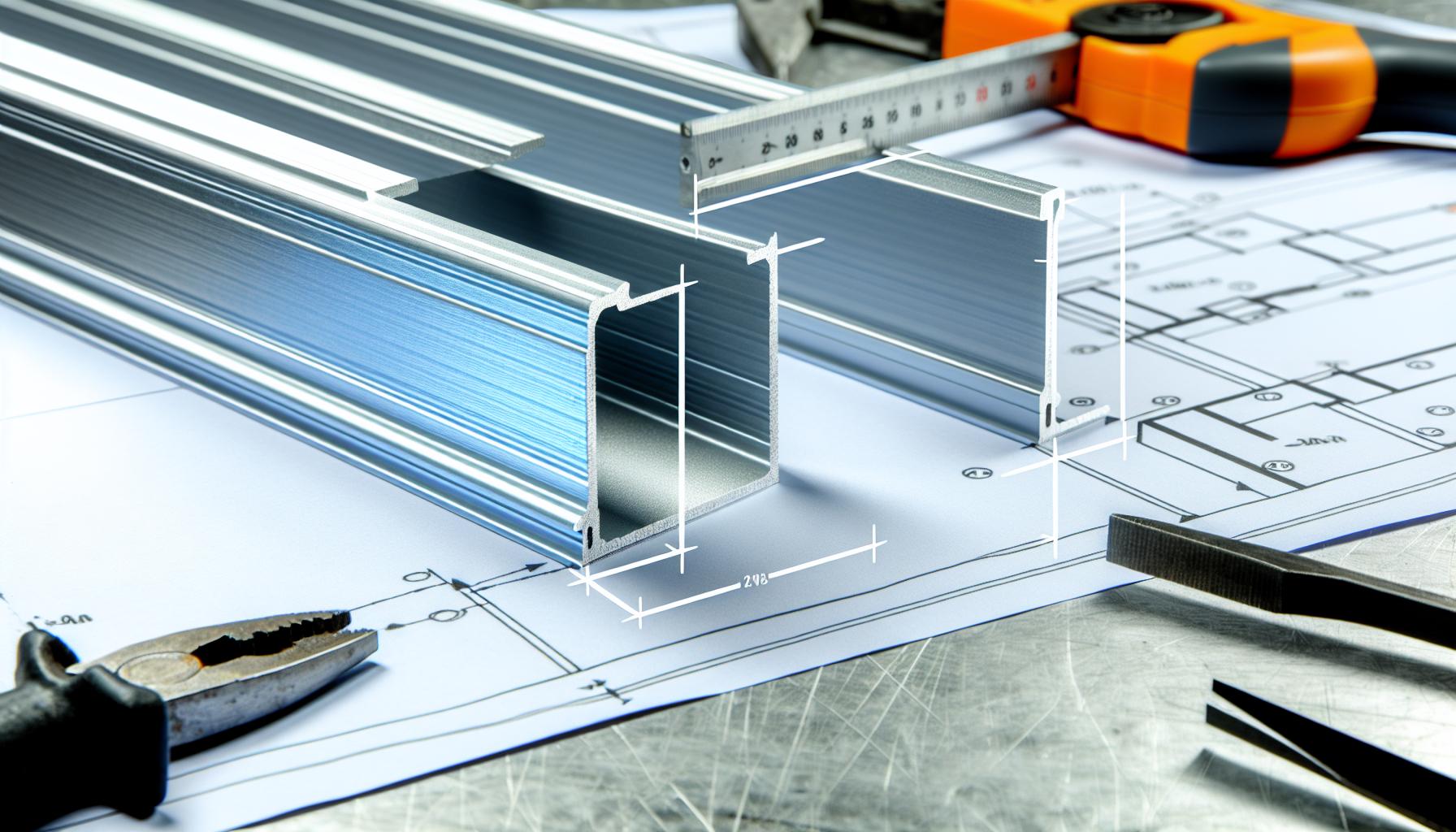
On an already-extruded profile, cutting is instead a secondary, finishing operation. The profile already arrives with its cross-section defined by the extrusion process; cutting only brings it to the required length and angle, without changing its cross-sectional geometry. This is the case for most of Profall's standard and special aluminum profiles, where cutting to length happens after the extrusion stage.
Custom aluminum cutting on extruded profiles: the Profall workflow
Profall manages cutting to length as part of a single production workflow. The profile starts out as an extrusion in 6000 series alloys (6060, 6063, 6005) and already arrives in the cross-section defined by the customer's technical drawing. From there, the in-house technical department assesses the feasibility of the cut together with the rest of the processing, defining the required lengths, angles, and tolerances.
For more complex cutting jobs, especially aluminum CNC cutting on special profiles, where a higher level of precision or larger production volumes are needed, Profall draws on its partnership with RC Ramera, a company specializing in high-precision aluminum machining. This collaboration expands the technical options available, while still giving the customer a single point of contact, from design through delivery of the cut-to-length part.
The difference from companies that only cut sheet metal or standard bars comes down to this: a sheet-metal cutter has no control over the extrusion stage upstream, while a buyer of standard bars can't influence the cross-section. Because Profall manages both stages, it can optimize the cut based on the profile's geometry from the outset, reducing the margin for error and shortening lead times.
The main aluminum cutting techniques
There are several technologies for cutting aluminum, and the right choice depends on the profile's cross-section, the required length, and the level of precision needed:
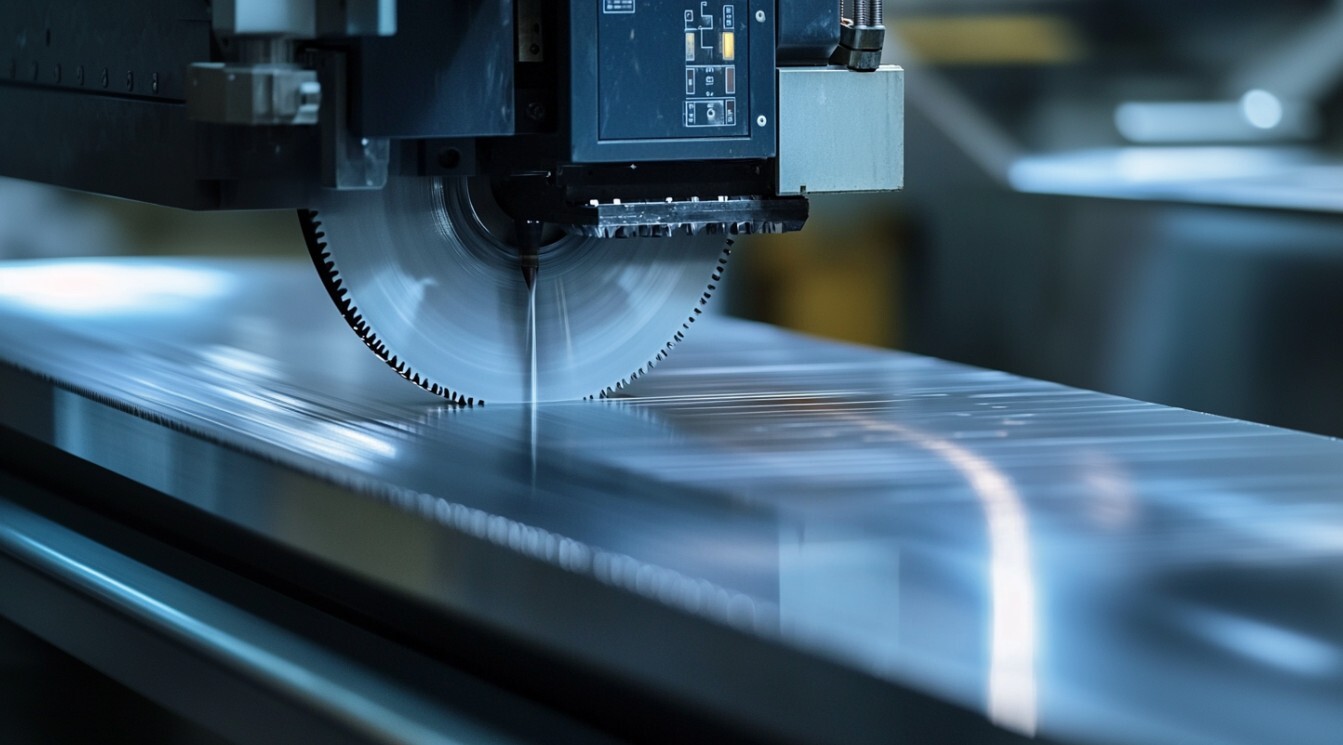
- Saw cutting - The most common technique for cutting aluminum bars and tubes to length. A circular blade, typically carbide-tipped, produces straight or angled cuts with good repeatability. It suits most standard profiles, where extremely tight tolerances aren't required.
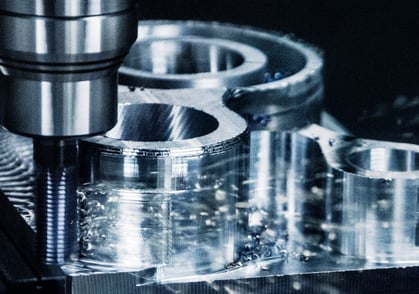
- Aluminum CNC cutting - When cutting is built into a computer numerically controlled machining cycle, alongside drilling or milling, precision increases and the process becomes repeatable across large batches, with no manual adjustments needed between parts. This is the case with CNC shearing, one of the mechanical processes Profall performs on its own extruded profiles, and it's often the preferred method for CNC cutting aluminum profiles that also require drilling or milling in the same cycle. We cover this in more depth in our in-depth guide to CNC aluminum machining.
- Laser cutting - A technology more commonly used on sheet metal than on extruded profiles, since it performs best on flat surfaces and thin gauges. On profiles with complex cross-sections or variable wall thickness, laser cutting has more limited applicability than saw cutting and aluminum CNC cutting.
The choice between these techniques is never one-size-fits-all: it depends on the profile's shape (standard or special), its dimensions, and the level of precision the final project requires. For high-precision or high-volume orders, aluminum CNC cutting is generally the default choice.
Cutting tolerances and quality: what to do and what to avoid
The quality of a cut depends on several technical factors that need to be assessed together, not individually:
- The alloy used affects machinability: 6000 series alloys, such as 6060, 6063, and 6005, offer good cutting machinability, with chips that come away easily.
- The wall thickness of the profile shapes the choice of technique and the cutting speed: thin walls require extra care to avoid deformation or burrs along the cut edge.
- The cutting speed needs to be calibrated to the cross-section and the alloy: too high a speed can generate localized heat and affect the edge finish, while too low a speed extends production time without improving quality.
- Using coolant or lubricant during cutting helps contain the heat generated by friction and protects both the tool and the part's surface finish.
- On tolerances, the main distinction is between standard and special profiles. Standard profiles are generally cut to wider tolerances, sufficient for most industrial applications. Special profiles, designed to customer specifications, often call for tighter tolerances, since the part needs to mate with other components during assembly.
Industries that require precision cutting on aluminum profiles
Precision cutting on aluminum profiles is required across several industries, where the exact length of the component has a direct impact on the function of the finished product.
- In the automotive sector, profiles cut to length become structural or trim components, where even a small variation in length can affect the fit with other body parts.
- In industrial vehicle outfitting, cutting to length is central to producing structures, guides, and reinforcements that need to fit precisely into the vehicle's frame.
- In the electromechanical sector, precision-cut profiles become supports and structures for electrical components, where dimensional tolerance is often dictated by the available mounting space.
- In construction as well, custom-cut aluminum profiles are used for windows, structures, and facade systems, where cutting precision determines the final seal and appearance of the installation.
In several of these sectors, aluminum CNC cutting is the default choice, since it keeps precision consistent across large batches of special profiles.
In all of these cases, an imprecise cut isn't just a cosmetic issue: it can call for additional processing, generate scrap, or, in the worst cases, make the part unusable.
How to request a custom aluminum cutting service from Profall
Requesting a custom aluminum cutting service from Profall follows a straightforward path, designed to keep back-and-forth between the customer and the technical department to a minimum.
The first step is sending in the technical drawing of the profile, indicating the required lengths and, where applicable, the cutting angles. A complete drawing speeds up every step that follows.
Next comes the feasibility review: Profall's technical department analyzes the cross-section, alloy, and required tolerances, flagging any potential issues before production begins. For jobs that call for aluminum CNC cutting, it also helps to indicate whether drilling or milling need to be combined in the same cycle.
Once feasibility is confirmed, a quote is prepared that accounts for quantity, alloy, cross-section, and the required level of precision.
To speed up this stage, it's helpful to specify upfront:
- the aluminum alloy required, or the desired mechanical properties
- the profile's cross-section, standard or custom
- the required cutting tolerance
- the quantity needed, to determine whether it's a small batch or a large-scale production run
Once the quote is approved, production begins, with cutting integrated into the rest of the profile's processing cycle.
Do you have a project that requires custom aluminum cutting?
Profall's technical team is available to assess feasibility, tolerances, and lead times based on your needs.
Contact us